
School safety grants are more competitive than most administrators expect, and the applications that win share a common trait: they read like an engineering plan, not a wish list. Funders — whether at the state or federal level — are asking the same underlying question every cycle. Can this district show it identified a real, specific vulnerability, and does the requested funding close that vulnerability in a measurable way? Districts that can answer both parts clearly tend to outperform districts that simply ask for equipment because a neighboring district got it.
The good news is that this is a learnable process. It rewards preparation, documentation, and discipline far more than it rewards persuasive writing. The following is the framework we walk administrators through before they submit anything.
Grant reviewers see the same generic narrative in dozens of applications every cycle: a paragraph asserting that the district "takes safety seriously" followed by a list of desired purchases. That approach rarely scores well, because it gives the reviewer nothing to verify. A physical security assessment conducted by an independent, credentialed team produces something entirely different — a dated report with findings tied to specific locations, entry points, and observed conditions. That document becomes the evidentiary backbone of the application.
An assessment is only half the job. The next step is converting each finding into a discrete, priced line item that a reviewer can approve without having to interpret intent. "Improve perimeter security" is not fundable language. "Replace failed door hardware on four secondary entry points identified in Section 3 of the assessment, at a specified per-door cost" is fundable language. Every request should trace back to a specific finding number, location, and dollar figure.
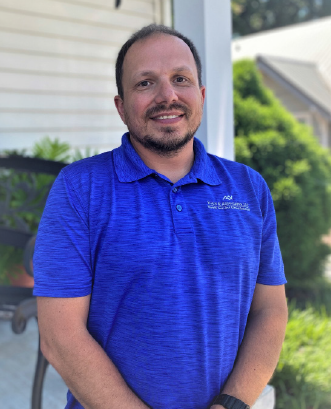
Grant strategy is guided by Adam Coffey, MBA, CSP, MESH, our CEO, who pairs safety credentials with hands-on business leadership. Meet our team →
Grant committees consistently favor requests tied directly to life-safety outcomes — controlling who can enter a building, reducing response time in an active threat, improving communication during a lockdown — over requests for items that improve convenience or general operations. A district that leads with door access control, visitor management, or emergency communication infrastructure is speaking the funder's language.
Districts frequently underestimate how long the full cycle takes — from assessment, to application, to award notification, to procurement, to installation. Waiting until a cycle opens to commission an assessment almost always means missing that cycle's deadline entirely, since a credible assessment takes real fieldwork and cannot be rushed into a few days.
Winning the grant is not the finish line. Most programs require outcome reporting, and districts that treat this as an afterthought make future applications harder for themselves. The same discipline that built the application should carry into implementation.
None of this requires guesswork. Districts that pair a rigorous, independent assessment with a disciplined, costed request consistently perform better in review than those relying on general appeals to safety. The process rewards the districts that do the groundwork before they ever open the application.